
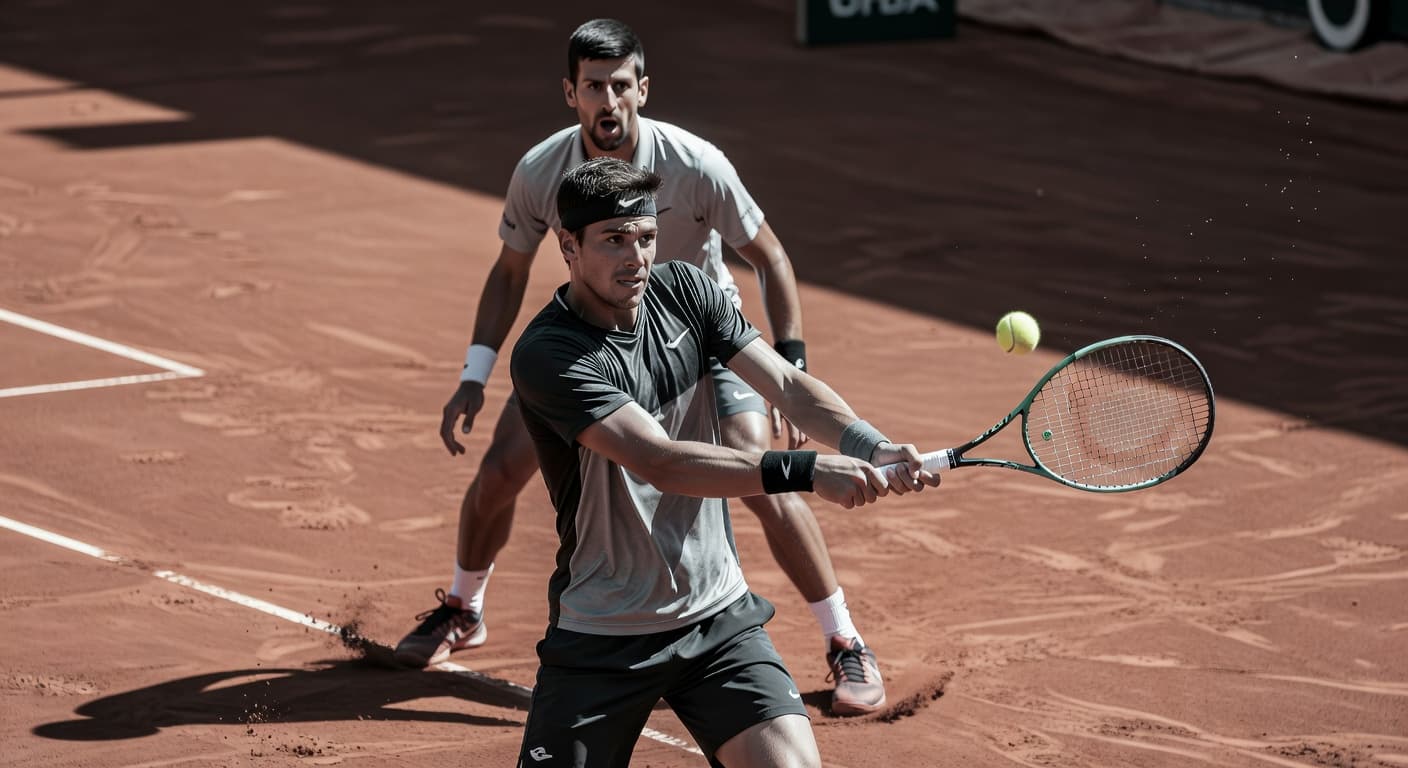
Nineteen-year-old Brazilian Joao Fonseca defeated Novak Djokovic 7-5, 7-5, 6-3, 7-5, 7-5 in the third round of Roland Garros 2026, marking what observers describe as a generational turning point in men's tennis. The match took place on the Philippe-Chatrier centre court in Paris under intense heat.
How did Fonseca overcome Djokovic?
Fonseca employed three primary tactical approaches to secure the upset victory. From the third set onward, he elevated his forehand to an average speed of 132 kilometres per hour, driving the ball deep into the corners and neutralising Djokovic's signature defensive positioning. In the fourth and fifth sets, as Djokovic's physical condition deteriorated, Fonseca repeatedly extended rallies at high pace, significantly reducing Djokovic's rally-winning percentage. In the deciding game of the fifth set, facing a break point, Fonseca delivered three consecutive service winners to clinch the match.
What does this mean for Djokovic?
The defeat means Djokovic did not advance to claim a 25th Grand Slam title at this tournament. The match was played in temperatures reaching 33 degrees Celsius on the Philippe-Chatrier court, and Djokovic displayed visible frustration during the final set, directing sharp gestures toward television cameras as his physical reserves depleted.
Why this matters for tennis
According to reporting from Báo Mới, commentators including Fox Sports have characterised the result as a symbolic end to an era. The outlet noted that Fonseca's victory represents the moment when the next generation has decisively claimed its place at the sport's highest level, rather than waiting for permission to do so.
Sources
- Báo Mới: Joao Fonseca tạo địa chấn tại Roland Garros 2026: Chấm dứt kỷ nguyên Novak Djokovic. Báo Mới, 2026-05-30.
Reported from public sources.